Archives
-
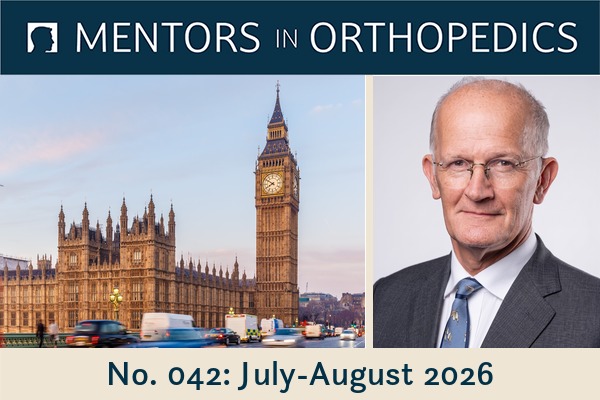
July-August 2026
Vol. 8 No. 042This month, we are honored to feature an interview with Professor Justin Cobb. Raised aboard the itinerant world of a nuclear submarine commander's family, he learned early to establish a reliable frame of reference amid uncertainty—a discipline that has defined his surgical philosophy. His career reflects a sustained commitment to navigational precision in theatre, integrating intraoperative imaging and robotic guidance to locate anatomy accurately, preserve native joint structures rather than sacrifice them, and measure outcomes rigorously to maintain scientific humility.
The clinical contributions converge on the direct anterior approach for total hip arthroplasty, examining its global uptake and refinements in soft-tissue preservation, including protection of the ascending branch of the lateral femoral circumflex artery and no-release femoral preparation. A complementary theme addresses hip resurfacing, evaluating its comparative safety and efficacy and its execution through the Hueter approach, collectively advancing tissue-sparing, anatomically informed reconstruction.
-
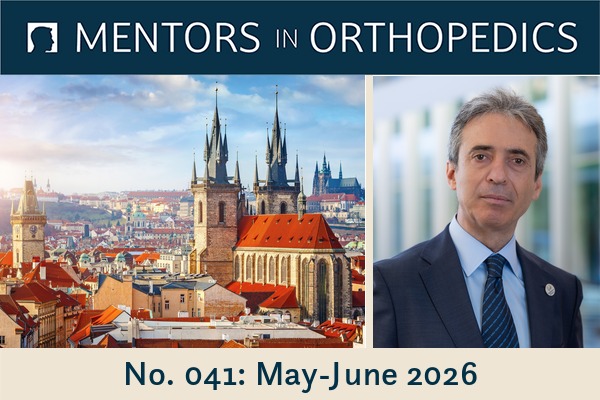
May-June 2026
Vol. 8 No. 041This month, we are honored to feature an interview with Professor Joan Carles Monllau, outgoing President of ESSKA. A native of Tortosa initially drawn to oceanic exploration, he redirected toward orthopedic surgery and established the knee as his comprehensive domain. Rejecting narrow subspecialization, his practice spans the full spectrum from meniscal repair to prosthetic reconstruction. His reflections candidly address professional missteps, the role of passion in surgical practice, and a measured perspective on emerging robotics.
The accompanying articles converge on knee preservation and reconstruction. Work on distal femoral osteotomy examines indications, planning, and complications in degenerative knee disease. Complementing this, the ligament balance-based technology for total knee arthroplasty and phenotyping contributions advance individualized biomechanics and alignment. A critical appraisal of hip arthroscopy weighs existing evidence against overstated claims, reinforcing the issue's emphasis on rigorous assessment of evolving techniques.
-
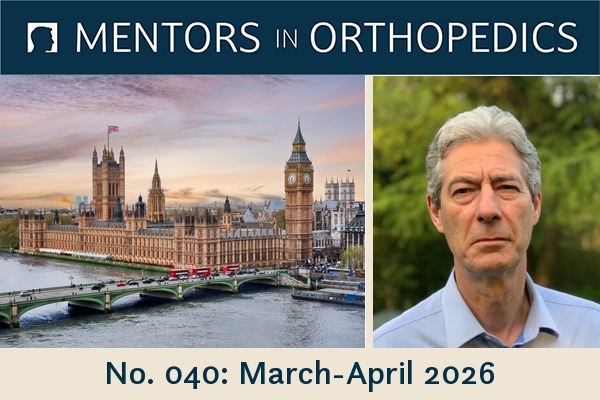
March-April 2026
Vol. 8 No. 040This month, we are honored to feature an interview with Richard Field, a London- and Cambridge-trained orthopaedic surgeon whose career bridges clinical innovation, research, and entrepreneurship. His trajectory, from early inventive pursuits and a background in computing to advocacy for reduced NHS waiting times, reflects a sustained commitment to creative problem-solving. Field's adoption of the anterior approach and his development of novel implants and surgical techniques illustrate a willingness to challenge established conventions in pursuit of refined solutions to complex hip pathology.
The accompanying articles address several themes in lower-limb arthroplasty and reconstructive surgery. Two contributions examine hip arthroplasty, evaluating acetabular offset discrepancies between mediCAD® planning and postoperative measurement affecting global offset restitution after THA, and return to sporting activity in young patients. Further studies explore medial unicompartmental knee arthroplasty, arthroscopic posterior Bankart repair using the Wilmington portal and knotless anchors, and the long-term evolution of minimally invasive hallux valgus surgery.
-
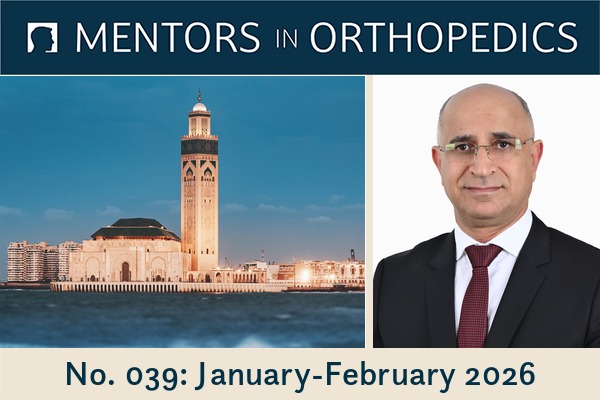
January-February 2026
Vol. 8 No. 039This month, we are honored to feature an interview with Professor Abdeljabbar Messoudi, President of SMACOT. The first physician in his family, Professor Messoudi traces a trajectory shaped by humanism and determination, from general practice in Dakhla to an academic career in Casablanca. His sustained commitment to orthopaedic surgery now extends to the transmission of knowledge and the international development of Moroccan orthopaedics.
This issue addresses several domains of trauma and joint pathology. In foot and ankle trauma, the management of bimalleolar equivalent fractures examines whether the medial approach should be systematic. Shoulder pathology is explored through two decades of experience with acromioclavicular joint dislocations and a historical-clinical perspective on scapulohumeral periarthritis and the stiff shoulder. Finally, pelvic trauma is advanced by osteotaxis, a technique proposed for the treatment of acetabular fractures.
-
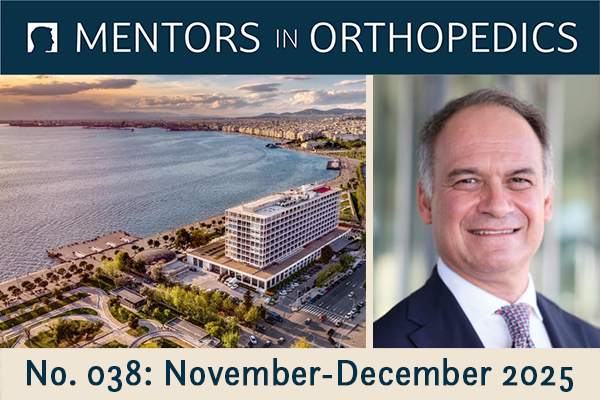
November-December 2025
Vol. 7 No. 038This month, we are honored to feature an interview with Professor Eleftherios Tsiridis, reflecting on a career defined by scientific curiosity and leadership in European orthopedics. The issue broadly examines the evolution of hip arthroplasty, offering critical updates on the biomechanics of Dual Mobility systems and the long-term efficacy of third-generation highly cross-linked polyethylene (XLPE).
Clinical articles in this edition address the pursuit of anatomical restoration, comparing short-stem versus standard prostheses and detailing the piriformis-preserving STAR approach. We also explore the complex management of Developmental Dysplasia of the Hip (DDH) and evaluate advanced solutions for revision surgery, including the BioBall® modular adapter and custom 3D-printed acetabular implants for severe bone defects.
-
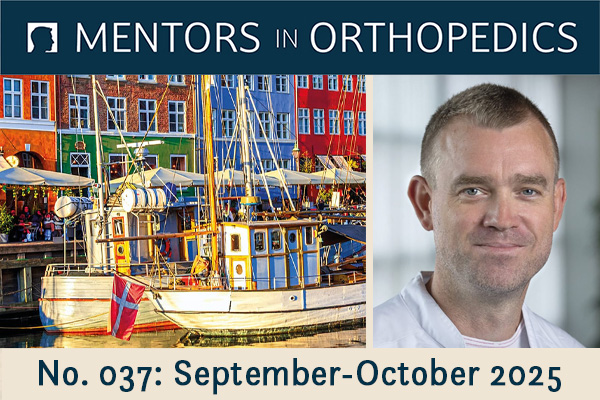
September-October 2025
Vol. 7 No. 037This issue of Mentors in Orthopedics opens with an in-depth interview with Professor Anders Troelsen, exploring his influential work on unicompartmental knee arthroplasty, fast-track recovery protocols, and the uncemented paradox through the lens of systematic registry data.
The scientific contributions focus on refining outcomes in complex arthroplasty. Authors evaluate the transition from experimental trends to true milestones in Total Knee Arthroplasty (TKA), while addressing the specific biomechanical and technical difficulties of performing TKA in patients with prior anterior cruciate ligament reconstruction using robotic assistance. The integration of digital tools continues with an analysis of technology-assisted revision TKA and a detailed review of the VELYS™ robot-assisted unicompartmental knee arthroplasty, emphasizing operative techniques and anatomical restoration. Finally, the issue examines the long-term efficacy of debridement, antibiotics, and implant retention (DAIR) in managing periprosthetic joint infection, providing evidence-based strategies for implant salvage.
-
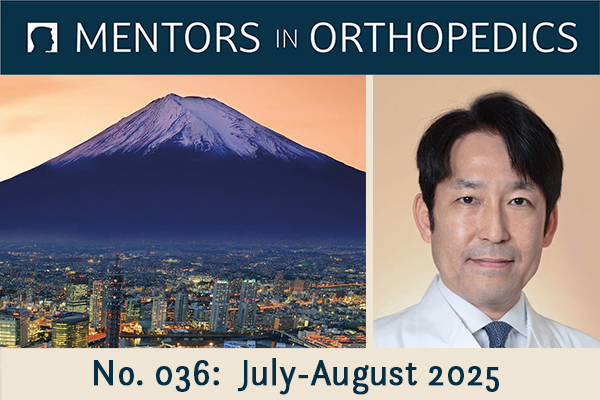
July-August 2025
Vol. 7 No. 036This issue of Mentors in Orthopedics features an extensive profile of Dr. Yutaka Inaba, whose work at Yokohama City University emphasizes the integration of CT-based navigation and robotics for the management of complex developmental hip dysplasia. His clinical leadership extends to addressing periprosthetic joint infections through advanced perfusion techniques, a theme mirrored in the scientific contributions of this volume.
The research articles focus on the diagnostic and therapeutic challenges of orthopedic implant infections. Investigations into the sample’s journey and biofilm-related infections emphasize the necessity of optimized protocols for laboratory diagnosis to ensure pathogen identification. Regarding surgical management, the efficacy of continuous local antibiotic perfusion is evaluated alongside specialized interventions for infected nonunion fracture neck of femur and chronic osteomyelitis of the small trochanter. Collectively, these studies advocate for a multidisciplinary approach involving anatomical restoration and rigorous microbiology to improve long-term efficacy in infection control.
-
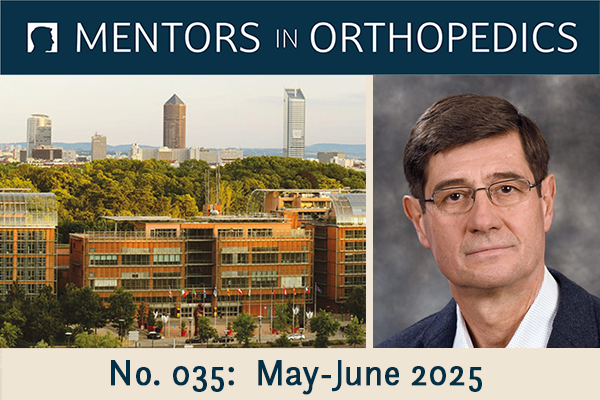
May-June 2025
Vol. 7 No. 035This month, we are honored to feature an interview with Professor Theofilos Karachalios, whose career trajectory spans from submarine medical officer to President of EFORT. Having established the orthopedic department in Larissa, his work reflects a sustained commitment to biomechanical precision and clinical pragmatism. His current investigations into functional alignment in robotic arthroplasty prioritize evidence-based evaluation over uncritical technological adoption.
The clinical articles address complementary dimensions of arthroplasty science. Implant safety and fixation are explored through studies on the evolution of metal ions following knee prosthesis implantation and line-to-line cementation in hip arthroplasty, with attention to the "French Paradox". Reconstructive complexity is examined in severe post-traumatic and post-arthroplasty acetabular defects, extending beyond existing classifications. Patellofemoral surgery is contextualized through The Lyon contribution to patellofemoral surgery, tracing the legacy from Albert Trillat to Henri Dejour. The issue is further complemented by a dedicated analysis of ligament balancing and alignment.
-
March-April 2025
Vol. 7 No. 034This month, we are honored to feature an interview with Dr. Pierre Barouk, President of the AFCP. Having witnessed the introduction of the SCARF osteotomy at its inception, he refined his expertise through rigorous training in Lille before establishing an independent practice in Bordeaux. His trajectory reflects a deliberate balance between familial heritage and professional autonomy, sustained by an enduring commitment to foot and ankle surgery. As AFCP president, Barouk advocates clinical pragmatism, peer-to-peer knowledge transfer, and sustained attention to the long-term efficacy of ankle arthroplasty.
The present issue addresses several pillars of reconstructive orthopedic surgery. Two contributions examine prosthetic joint infection, articulating the principles and outcomes of one-stage revision arthroplasty for infected total hip replacement and delineating the limits of implant retention. Forefoot pathology is represented through a retrospective cohort of 113 cases evaluating Weil osteotomy of the first metatarsal in grade 1 to 3 hallux rigidus at a mean four-year follow-up. A concluding article considers implant allergy in total knee arthroplasty, reviewing first-line therapeutic options and clinical outcomes.
-
January-February 2025
Vol. 7 No. 033This month, we are honored to feature an interview with Cyril Mauffrey, MD, trauma surgeon and Editor-in-Chief of EJOST. His career, shaped across France, Italy, and the United Kingdom before establishing a leading trauma center at Denver Health, centers on complex pelvic and acetabular reconstructions, geriatric fracture management, and hemorrhage control protocols. His commitment to international knowledge transfer through fellow mentorship and editorial leadership defines his lasting contribution to orthopedic trauma surgery.
The clinical articles address diverse subspecialties. Trapeziometacarpal joint imaging in the surgical management of basal thumb arthritis informs operative planning in hand surgery, while orthopaedic surgical site infection prevalence in Egypt contributes epidemiological data on infection control. Ligamentous reconstruction is examined through revision ACL reconstruction, and implant selection is explored in the context of short stems for obese patients. The issue concludes with an anatomical and fluoroscopic review of percutaneous screw fixation of the pelvic ring and acetabulum.
-
November-December 2024
Vol. 6 No. 032This month, we are honored to feature an interview with Dr. Bertrand Sonnery-Cottet, President of the French Arthroscopy Society. Having overcome a challenging early background, Dr. Sonnery-Cottet established himself as a leading authority in knee ligament reconstruction, notably through his foundational contributions to anterolateral ligament procedures. His work integrates data-driven methodology with mixed reality applications in the operative setting, with the sustained aim of reducing surgical failure in sports surgery.
The clinical articles in this issue span infection prevention, surgical access, and ligament pathology. The prophylactic role of local antibiotics in PMMA bone cement is critically examined, followed by an evaluation of the lateral subvastus approach for Total Knee Arthroplasty and its impact on postoperative recovery. Two further contributions address ACL pathology: the management of ACL intra-substance tears in growing children and teenagers, and the incidence and risk factors for arthrogenic muscle inhibition after ACL reconstruction.
-
September-October 2024
Vol. 6 No. 031This month, we are honored to feature an interview with Professor Peter Verdonk, orthopedic surgeon at the University of Antwerp. Shaped by a fellowship in Lyon and a multi-generational medical background, Professor Verdonk has concentrated his career on knee biomechanics, meniscus preservation, and ligament reconstruction. His approach emphasizes patient-specific morphotypes as determinants of surgical outcomes, advancing individualized, evidence-based orthopedic care within Belgian and international professional communities.
The articles in this issue address intersecting dimensions of ACL surgery. Management of combined injuries of the ACL and medial knee and the interaction between anterior cruciate ligament and tibial slope, including the role of tibial deflexion osteotomy, examine current approaches to complex knee pathology. Practical strategies for dealing with bone tunnels in revision ACL reconstruction offer technical guidance for reoperative cases. The issue further extends to perioperative care, exploring immersive virtual reality as a means to potentiate hypnosis in surgical support.
-
July-August 2024
Vol. 6 No. 030This month, we are honored to feature an interview with Professor Hiroyuki Tsuchiya, Chair of Orthopedic Surgery at Kanazawa University. His career has centered on musculoskeletal oncology, integrating the Ilizarov method with limb-salvage surgery and developing iodine-coated implants and caffeine-potentiated chemotherapy to address the concurrent challenges of malignancy and infection. As incoming WAIOT president, Professor Tsuchiya remains dedicated to biological reconstruction and evidence-based mentorship of the next generation.
This issue's clinical contributions address infection management and reconstructive surgery. Two articles examine multi-drug resistant bacteria and bacterial biofilms in war-related musculoskeletal infections, including a retrospective analysis of delayed reconstructive treatment of war injuries from the Ukraine conflict. A comparative study evaluates microbiological versus histological examinations in septic arthritis of the knee joint, while a technical report addresses radial head reconstruction using a capitellum graft. The Dive into the data feature bridges clinical evidence with patient-centered practice.
-
May-June 2024
Vol. 6 No. 029This month, we are honored to feature an interview with Professor Roland Becker, President of ESSKA. His career, shaped by formative training in Basel and England, spans reconstructive knee surgery, robotic-assisted arthroplasty, and soft tissue management. A committed advocate for interdisciplinary practice, Professor Becker has consistently integrated physiotherapy and radiology into surgical workflows. The interview further explores his perspectives on collaborative research and the future of orthopedic education.
The clinical articles address complementary themes across knee and shoulder surgery. Alignment strategies in total knee replacement are examined alongside the biomechanical consequences of medial meniscus ramp lesion injury on extrusion and meniscal mobility. Shoulder pathology is represented by analysis of anterosuperior impingement through the concept of the "biceps box", and by arthroscopic capsulolabral revision repair for recurrent anterior shoulder instability. Ligament reconstruction is addressed through outcomes of second injuries after ACL reconstruction and lateral tenodesis with hamstrings.
-
March-April 2024
Vol. 6 No. 028This month, we are honored to feature an interview with Michel Bonnin, orthopedic surgeon and President of the European Knee Society. A product of the Lyonnaise school, Professor Bonnin has devoted his career to the anatomical restoration of native knee kinematics, building on early biomechanical research into tibial slope conducted alongside Henry Dejour. His work has since expanded into customized prosthetic design, three-dimensional preoperative planning, and robotic-assisted surgery, with a sustained emphasis on standardizing individualized surgical protocols across European practice.
The clinical contributions in this issue address personalized alignment in TKA and examine why individualized TKA facilitates the restoration of native alignment, alongside current concepts and a glimpse into the future of partial knee replacement. A new perspective in cementless total knee arthroplasty broadens the implant discussion, while individualised therapy of femoral neck fractures — the Wiesbaden concept extends the scope to proximal femoral pathology.
-
January-February 2024
Vol. 6 No. 027This month, we are honored to feature an interview with Joan Leal, a Spanish orthopedic surgeon whose career reflects the integration of national practice into the European academic framework. Trained in Madrid and Lyon, Leal has focused on robotic-assisted knee arthroplasty and served as former president of the Spanish orthopedic society, advocating for clinical excellence, resident mentorship, and the role of individualized alignment and artificial intelligence in advancing the specialty.
The clinical contributions center on knee arthroplasty and perioperative management. Two articles address surgical precision: trochlear sulcus modeling for femoral implant positioning during navigated TKA and conventional navigation with the extension gap first technique for proper bone cuts in TKA. The influence of audiovisual information on preoperative expectations in total knee replacement is also examined. Further contributions address multiligament knee injuries and gait analysis and the surgical classification and outcomes of third-generation percutaneous intramedullary nailing for displaced two-part surgical-neck fractures.
-
November-December 2023
Vol. 5 No. 026This month, we are honored to feature an interview with Alexandre Lädermann, a Geneva-based orthopaedic surgeon whose career integrates rigorous European training with American technical innovation. Having refined his expertise under mentors such as Gilles Walch and Christian Gerber, he has dedicated his practice to the clinical validation of shoulder arthroplasty and arthroscopic techniques. His commitment to evidence-based practice is reflected in his academic contributions within the Swiss university system, alongside a broader transition from reconstructive to biological interventions.
The clinical articles span both lower and upper limb surgery. High tibial osteotomy is examined through the lens of patient selection for a lateral closing wedge technique. Shoulder surgery is addressed through a subscapularis-sparing approach for reverse total shoulder arthroplasty and the arthroscopic guided Latarjet procedure. Finally, calcar-guided short stems in total hip arthroplasty are discussed in the context of contemporary implant selection.
-
September-October 2023
Vol. 5 No. 025This month, we are honored to feature an interview with Luigi Zagra, a Milan-based orthopedic surgeon whose career reflects a sustained commitment to intellectual rigor and the systematic use of clinical registries to evaluate surgical performance. A prominent figure in the European Hip Society and EFORT, Zagra has dedicated his practice to bearing surface optimization and complex hip revisions, emphasizing international collaboration and rigorous data analysis as the primary vehicles for advancing the discipline.
The clinical contributions in this issue address two principal domains. Musculoskeletal infection is examined through a case report on septic arthritis of the native hip caused by Granulicatella adiacens, complemented by a literature review, and a case series investigating surgical options and outcomes in calcaneal osteomyelitis. The issue further addresses revision of total hip arthroplasty, presenting an epidemiological multicentre analysis of 963 patients in France alongside an evaluation of dual mobility systems as a reconstructive strategy in revision settings.
-
July-August 2023
Vol. 5 No. 024This month, we are honored to feature an interview with Nicolas Bonin, a hip surgeon whose career reflects a deliberate transition from the Lyon knee school toward hip preservation and arthroplasty. As a founding member of the dual mobility congress and treasurer of ISHA, he has shaped his practice around soft-tissue preservation and the anterior approach, while actively contributing to the international dissemination of surgical technique.
The clinical articles converge principally on periprosthetic joint infection. The diagnostic challenge of bacteria living in biofilms is examined through enhanced cultural examination of synovial and other organic liquids, while approaches in the surgical treatment of fungal prosthetic joint infection address a refractory pathogen. The decision-making process in periprosthetic infection treatment management is further explored through a multimodal approach, and post-infection tibia bone defects managed with Ilizarov external fixation extend the discussion to skeletal reconstruction. Arthroplasty outcomes are addressed through clinical results after total hip arthroplasty with a dual-mobility hemispherical cup.
-
May-June 2023
Vol. 5 No. 023This month, we are honored to feature an interview with Enrique Gómez Barrena, Professor of Orthopedic Surgery. Shaped by an academic lineage rooted in Zaragoza and refined through a fellowship at the Hospital for Special Surgery, his career integrates anatomical precision with regenerative medicine in complex joint reconstruction. As President of EFORT, he has advanced European standardization and evidence-based practice, addressing the clinical demands of an aging population.
This issue's clinical contributions span alignment strategies and implant selection in major joint reconstruction. In total knee arthroplasty, one article examines TKA in extraarticular deformities managed through intraarticular correction without increased constraint, while a second introduces inverse kinematic alignment as a framework for personalized alignment. Shoulder arthroplasty is addressed through an assessment of the stemless shoulder implant. A further study evaluates whether surgical approach influences canal fill of the femoral component in THA, contributing to the evidence base on technique-dependent outcomes.
-
March-April 2023
Vol. 5 No. 022This month, we are honored to feature an interview with Alessandro Bistolfi, an orthopedic surgeon whose career bridges clinical practice and material science. Rooted in Turin and shaped by international mentorship, he has conducted rigorous investigations into polyethylene oxidation and the incorporation of vitamin E in arthroplasty, with sustained focus on long-term implant stability. His expertise encompasses complex knee and hip reconstructions, and he actively advocates for advances in biotechnology and surgical education.
The clinical articles address complementary domains of reconstructive and trauma surgery. A technical review of the short proximal femoral nail with cement augmentation offers procedural guidance supported by literature synthesis. Attention then turns to stemless reverse shoulder arthroplasty, where humerus bone quality is assessed as a determinant of outcome across 86 SMR implants. Further contributions examine the clinical examination of knee instability and the management of shoulder instability with bipolar lesions through the on-track/off-track concept.
-
January-February 2023
Vol. 5 No. 021This month, we are honored to feature an interview with Dr. Elisabeth Arendt. Her career has been defined by rigorous investigation of gender-specific injury patterns, with particular emphasis on anterior cruciate ligament pathology and patellofemoral biomechanics, integrating European objective anatomical assessments with North American soft tissue techniques. Dr. Arendt has further distinguished herself through sustained advocacy for institutional parental leave and professional diversity, reshaping the surgical training environment through structured mentorship.
The clinical contributions in this issue span key domains of knee and patellofemoral pathology. The management of idiopathic patellofemoral pain is addressed alongside surgical options for chronic quadriceps rupture repair, contrasting the Chambat technique with the sardine tin technique. Anterior tibial tuberosity distalization osteotomy is examined as a corrective strategy for painful patella alta. A historical perspective traces the evolution from resection arthroplasty to partial knee replacements, contextualizing contemporary implant selection within a broader clinical legacy.
-
November-December 2022
Vol. 4 No. 020This month, we are honored to feature an interview with Professor Andreas Halder, President of the German Orthopaedic Society and director of one of Europe's most active joint replacement centers. Having transitioned from arthroscopic reconstruction to high-volume arthroplasty, Professor Halder's scientific trajectory was shaped by a research tenure at the Mayo Clinic, where he developed a systematic approach to clinical inquiry. His current work integrates robotics and data-driven outcomes into surgical practice, while maintaining a commitment to evidence-based guidelines and the mentorship of emerging orthopedic surgeons.
The clinical articles in this issue address four distinct domains. Knee revision surgery is examined through the application of 3D printed models, exploring their role in preoperative planning and intraoperative guidance. The diagnosis and therapeutic management of posterior shoulder dislocation are subsequently reviewed, followed by a focused analysis of trauma to the Lisfranc joint. The issue concludes with a critical appraisal of artificial intelligence in knee arthroplasty, considering its implications for surgical decision-making and outcome optimization.
-
September-October 2022
Vol. 4 No. 019This month, we are honored to feature an interview with Professor Robert Hube, President-Elect of the European Knee Society and Director of Arthroplasty at Munich's OCM Clinic. His career, shaped by formative training in South Africa and Pittsburgh, reflects a sustained commitment to surgical efficiency and subspecialty education. Leading a practice performing over 1,200 annual arthroplasties, Professor Hube advocates for structured postgraduate training and subspecialization as pillars of advancing international orthopedic standards.
The accompanying articles address a broad spectrum of knee arthroplasty challenges. Infection management is examined through two-stage TKA protocols for active septic knee arthritis with severe chondrolysis and treatment of infected unicompartmental knee arthroplasty. Technical optimization is addressed in key steps for total knee arthroplasty and the role of MPFL reconstruction in TKA. Comparative outcomes between high tibial osteotomy and unicondylar arthroplasty and a critical appraisal of robotic knee surgery further enrich this issue.
-
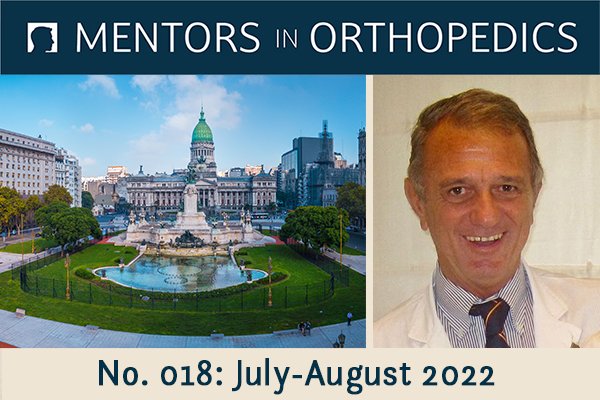
July-August 2022
Vol. 4 No. 018This month, we are honored to feature an interview with Professor Hernán Del Sel, President of the World Association Against Infection in Orthopaedics and Trauma. Trained under the influence of John Charnley and Ray Gustilo, his career bridges foundational surgical principles with contemporary global collaboration. A distinguished advocate for inclusive scientific exchange, Professor Del Sel integrates clinical data from low-resource settings into international discourse, while emphasizing mentorship and rigorous self-critical practice as essential to the specialty's advancement.
The issue's clinical contributions center on the diagnosis and management of orthopedic infection. Epidemiological and microbiological dimensions are addressed through a 5-year retrospective investigation of septic arthritis of the knee in Azerbaijan, complemented by therapeutic guidelines for joint arthroplasty in sequelae of septic hip arthritis. Operative strategies including static spacers in periprosthetic knee infections, antibacterial implant coating, and a novel DTT-based diagnostic approach to biofilm-related infections further define the issue's scientific scope.