Archives - Page 2
-
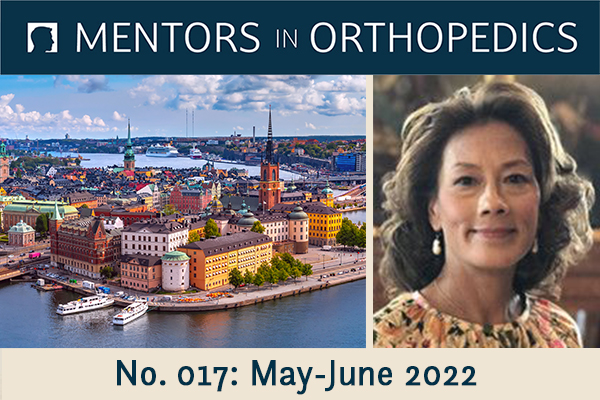
May-June 2022
Vol. 4 No. 017This month, we are honored to feature an interview with Professor Li Felländer-Tsai, President of EFORT and Chair at the Karolinska Institute. Her career traces a distinctive arc from immunology research to international surgical leadership, shaped by early mentorship under pioneering figures and specialized expertise in the care of professional dancers. A recognized authority in artificial intelligence and medical simulation, Professor Felländer-Tsai integrates systematic methodology with technological innovation to address contemporary imperatives in patient safety and global surgical education.
The accompanying articles span several domains of lower limb surgery. Hip preservation is addressed through current concepts in the arthroscopic management of femoroacetabular impingement, while minimally invasive arthroplasty is examined via the piriformis-preserving MIS posterior STAR approach for THA. Patellofemoral biomechanics are explored in the context of supratuberositary tibial deformational osteotomy for instability due to excessive tibial torsion. The issue is further complemented by a synthesis of the 2021 International Consensus Meeting on Venous Thromboembolism.
-
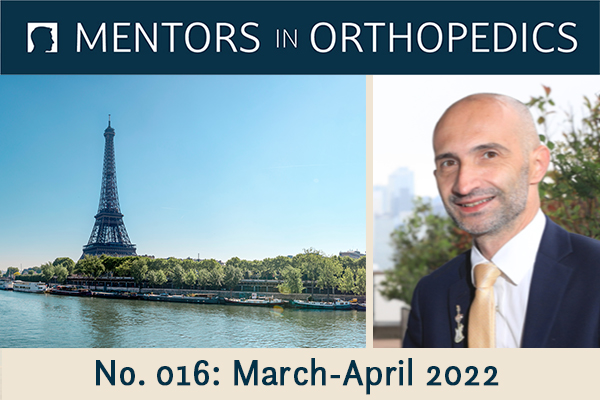
March-April 2022
Vol. 4 No. 016This month, we are honored to feature an interview with Professor Thomas Bauer, whose career exemplifies a sustained commitment to clinical evaluation, percutaneous foot and ankle surgery, and one-stage infection management protocols. Mentored at Ambroise-Paré and later elevated to the presidency of the 20th ESSKA Congress, Professor Bauer has consistently prioritized evidence-based validation of surgical innovation alongside structured knowledge transmission and the integration of patient-reported outcomes.
The clinical articles address a breadth of topics spanning knee and ankle pathology. Contributions examine the natural history of anterior cruciate ligament injury, the role of tibial slope in ACL rerupture, and endoscopic flexor hallucis tenolysis combined with ACL reconstruction. Further articles evaluate acute patellar ligament reconstruction with the synthetic LARS ligament, management of the non-infected unhappy total knee arthroplasty, the evidence base for the subacromial balloon, and open versus arthroscopic repair for chronic lateral ankle instability.
-
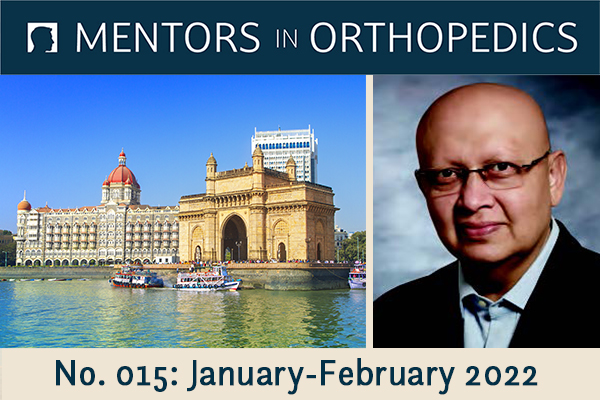
January-February 2022
Vol. 4 No. 015This month, we are honored to feature an interview with Dr. Sanjay Desai, a pioneering figure in Indian shoulder and upper limb surgery. Following formative fellowships under Christopher Constant and David Dandy, Dr. Desai chose to repatriate advanced arthroscopic expertise rather than pursue a career in the United Kingdom, establishing specialized shoulder surgery as a recognized sub-specialty across India. His discussion addresses the evolution of upper limb reconstruction and the imperative of aligning clinical research with international academic standards.
The clinical articles span arthroscopic and reconstructive techniques across major joints. Current techniques in arthroscopic Bankart repair address shoulder instability management, while modern cartilage repair combined with realignment osteotomy of the knee joint and biplanar opening-wedge tibial valgus osteotomy for medial knee OA examine lower limb preservation strategies. The issue concludes with a critical appraisal of femoro-acetabular impingement (FAI), evaluating the continued role of open surgery in contemporary practice.
-
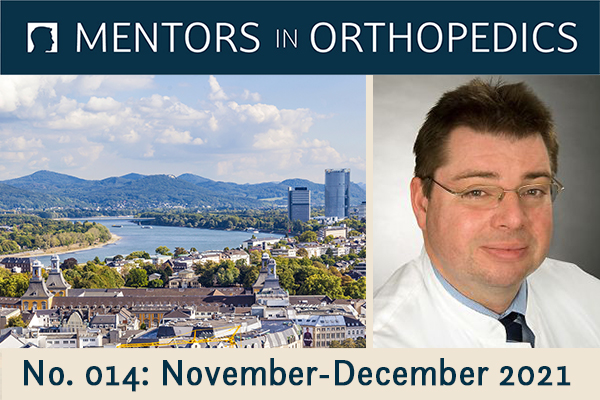
November-December 2021
Vol. 3 No. 014This month, we are honored to feature an interview with Professor Dieter Christian Wirtz, whose career exemplifies the structural integration of orthopedics and traumatology within German academic medicine. As the leader of the first merged university department of its kind in Bonn, Professor Wirtz has balanced broad foundational training with deep sub-specialization in complex revision arthroplasty and periprosthetic infection. His current advocacy for three-stage care models and ecological sustainability reflects an evolving conception of surgical responsibility.
The accompanying articles address advanced reconstruction and emerging technologies across hip and knee surgery. The prosthetic management of coxa vara hips with increased femoral offset and planning and repair of acetabular defects in revision total hip arthroplasty examine solutions to complex anatomical challenges. Attention then shifts to the knee, covering patient-specific alignment and balancing with computer-assisted surgery in total knee arthroplasty and temporary arthrodesis using coupled AO rods. A dedicated contribution further evaluates the clinical integration of mixed reality and artificial intelligence in surgical practice.
-
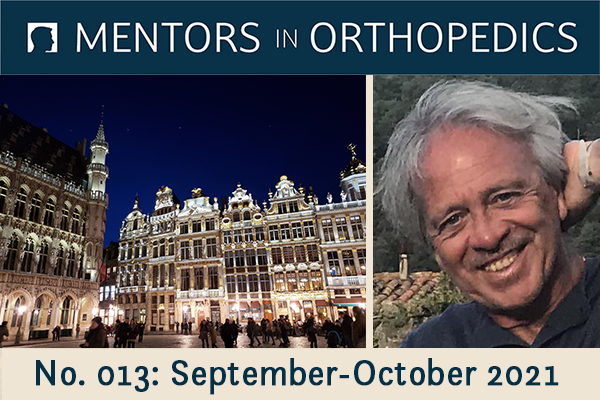
September-October 2021
Vol. 3 No. 013This month, we are honored to feature an interview with Jean-Alain Epinette, a French orthopedic surgeon whose career reflects a sustained commitment to hip and knee arthroplasty. From his early practice to his leadership as President of the European Hip Society, Epinette has been instrumental in advancing hydroxyapatite-coated implants and pioneering objective clinical data collection through the OrthoWave system, positioning him at the intersection of surgical precision and digital documentation.
The clinical articles in this issue address several dimensions of hip arthroplasty practice. Topics include revision total hip arthroplasty using cementless stems with bioactive coatings, lessons from 34 years of hydroxyapatite clinical experience, and the rationale for calcar-guided short stems. Further contributions examine total hip arthroplasty in patients with low bone mass and the role of personalized hip joint replacements using large diameter heads in optimizing anatomical restoration and long-term implant performance.
-
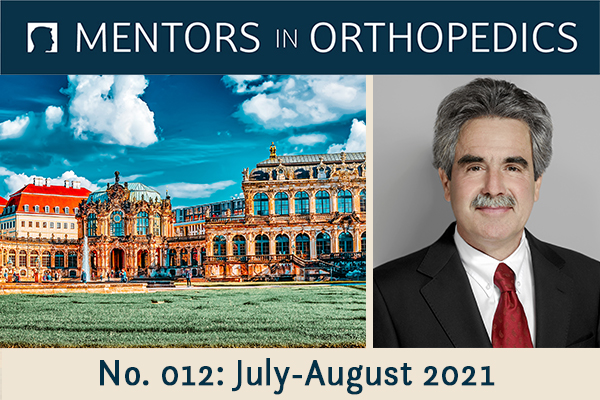
July-August 2021
Vol. 3 No. 012This month, we are honored to feature an interview with Professor Klaus-Peter Günther, whose career reflects a deliberate integration of clinical practice and systemic reform. From self-funded international fellowships to founding the German Arthroplasty Registry, Günther has shaped both surgical standards and institutional frameworks. As EFORT President, he has prioritized harmonized European orthopedic education and patient safety within the context of the Medical Device Regulation, advocating for a sustainable professional model that bridges technical mastery with scientific accountability.
The clinical articles in this issue span a broad range of musculoskeletal conditions. Spinal pathology is addressed through a sublaminar osteotomy technique for lumbar spinal stenosis, while upper extremity care is represented by an update on treatment options for thumb arthritis. Hip preservation is examined via simultaneous periacetabular osteotomy and arthroscopically assisted management of cam-related pathology in acetabular dysplasia. Additional contributions address endoscopic piriformis tenotomy and sciatic nerve release and a modified Tibial Tubercle "Crest" Osteotomy (TCO) for extensile knee exposure.
-
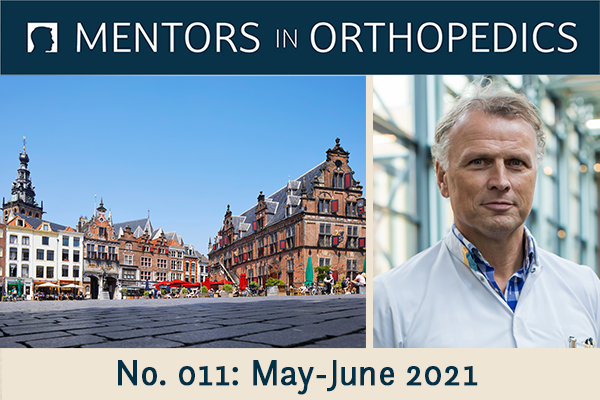
May-June 2021
Vol. 3 No. 011This month, we are honored to feature an interview with Gijs Van Hellemondt, a revision arthroplasty specialist at the Sint Maartenskliniek whose career reflects a sustained commitment to surgical precision and knowledge transfer. Shaped by early observational fellowships, his practice emphasizes meticulous documentation of technical nuance. As President of the European Knee Society, Van Hellemondt has translated this philosophy into international collaborative frameworks, most recently championing open mentorship models to prepare younger surgeons for the evolving demands of modern orthopedic practice.
The clinical and scientific articles in this issue address both technical and organizational dimensions of arthroplasty. Component rotational alignment in total knee arthroplasty is critically examined alongside strategies for optimizing efficiency in the operating theater. Lateral unicompartmental knee arthroplasty with mechanical instrumentation is explored with attention to long-term outcomes, while bearing options in total hip arthroplasty offer guidance for surgical decision-making. The EKS and ICJR Partnership and a critical review of robotic TKA surgery further contextualize the evolving institutional and technological landscape.
-
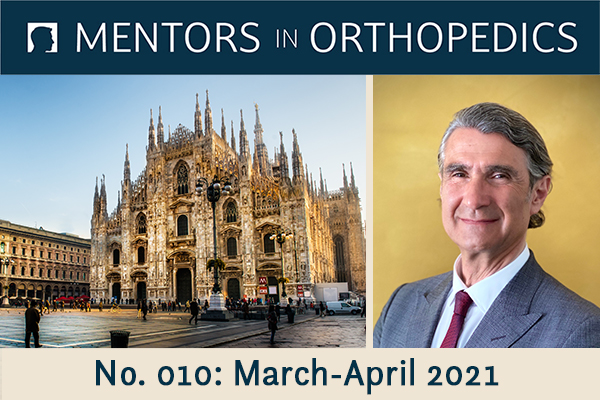
March-April 2021
Vol. 3 No. 010This month, we are honored to feature an interview with David Dejour, MD, a leading figure of the Lyon school of knee surgery and past president of the European Society of Sports Traumatology, Knee Surgery and Arthroscopy (ESSKA). His career is distinguished by a sustained commitment to translating foundational surgical traditions into standardized, evidence-based practice on a global scale. As president of ESSKA, he championed institutional continuity and the expansion of certification frameworks to broaden access to specialized orthopedic knowledge. This interview examines his perspective on the interplay between surgical heritage and scientific rigor, and his role as an advocate for collaborative research and the formal validation of emerging trends in knee surgery.
The clinical articles in this issue span several interconnected domains. In traumatology, a structured diagnostic algorithm is presented for acute syndesmotic injuries, commonly referred to as high ankle sprains, integrating clinical history, physical examination, and imaging findings. Attention then turns to lower limb alignment in arthroplasty, with a discussion of the functional knee phenotype concept and its implications for the ongoing debate surrounding frontal alignment in total knee arthroplasty (TKA). Osteotomy technique is addressed through an evaluation of patient-specific cutting guides for both straightforward and complex intra-articular high tibial osteotomies. The issue also examines the long-term efficacy of fresh osteochondral allograft (FOCA) transplantation of the knee, a procedure underutilized in the European context, before concluding with a reflection on ESSKA @ Home 2021, a platform through which contemporary surgical trends were critically assessed against scientific evidence.
-
January-February 2021
Vol. 3 No. 009This month, we are honored to feature an interview with Alberto Gregori, MD, a surgeon whose career spans the intersection of advanced technology and global health equity. From his early clinical work in post-war Zimbabwe to his pioneering contributions to computer-assisted surgery in Scotland, Gregori has demonstrated a sustained capacity for adaptation across radically different resource environments. His foundational work with the OrthoPilot and Navio robotic systems positioned him as a key contributor to the evolution of navigated arthroplasty. This interview explores how he reconciles high-technology surgical practice with a broader commitment to sustainable training models designed to empower surgeons operating in resource-limited settings worldwide.
The clinical articles in this issue address a broad spectrum of orthopedic challenges. The concept of microinstability of the hip is introduced as an emerging framework to account for otherwise unexplained hip and groin pain, offering a diagnostic paradigm with meaningful implications for clinical evaluation. A thematic reflection on global orthopaedics examines the specialty's historical legacy and its obligations to future generations of practitioners. Shifting to reconstructive surgery, the application of arthrodesis with retrograde compression nail is evaluated in the context of Charcot neuroarthropathy of the hindfoot, a technically demanding condition requiring durable stabilization solutions. The issue concludes with an analysis of trochlear navigation as a method for achieving accurate rotational alignment of the femoral component in total knee arthroplasty (TKA), reinforcing the role of intraoperative guidance in optimizing implant positioning and functional outcomes.
-
November-December 2020
Vol. 2 No. 008This month, we are honored to feature an interview with Manuel Ribas, Director of the Orthopaedic Unit at Dexeus University Hospital. Over the course of his career, Ribas has established himself as a leading authority in hip preservation surgery, having introduced periacetabular osteotomy to Spain following international fellowships. His work bridges conservative, joint-sparing techniques with minimally invasive management of femoroacetabular impingement, with particular focus on younger, active patient populations. His integration of high-volume surgical practice with specialized training has meaningfully influenced clinical standards for complex hip pathology.
The accompanying articles address infection management through antibiotic bone cement in trauma and orthopedic surgery, alongside key principles of perioperative geriatric care in femoral neck fractures among elderly patients. Shoulder instability is examined through the Remplissage procedure in cases where Bankart repair proves insufficient. Finally, the issue presents the KNEO posterior-stabilized implant for total knee arthroplasty, highlighting its compatibility with universal surgical instrumentation across diverse surgical practices.
-
September-October 2020
Vol. 2 No. 007This month, we are honored to feature an interview with Arun Mullaji, a distinguished knee surgeon with extensive clinical activity. A founding member of the Indian Hip and Knee Surgery Society and past president of the Asia Pacific Arthroplasty Society, Mullaji has shaped the field of arthroplasty through decades of surgical leadership, academic engagement, and contributions to the advancement of knee surgery on an international scale.
The accompanying articles address key areas in joint preservation and reconstruction. Lateral unicompartmental knee arthroplasty and medial unicompartmental knee arthroplasty are examined with respect to patient selection, procedural indications, and technical precision necessary to ensure durable outcomes. A dedicated contribution on hip arthroscopy on the orthopaedic table outlines technique optimization and complication avoidance. Finally, a pictorial and systematic approach to varus deformity provides a structured framework for deformity assessment and surgical planning.
-
July-August 2020
Vol. 2 No. 006This month, we are honored to feature an interview with Professor Siegfried Hofmann, whose career traces a distinctive arc from early research into osteonecrosis and fat embolism toward a sustained focus on knee arthroplasty and surgical education. A former professional water polo player, Hofmann has channeled his competitive discipline into clinical leadership at Stolzalpe and humanitarian surgical missions in conflict regions, while championing rigorous subspecialization and a European perspective on orthopedic training and discourse.
The clinical articles in this issue address a spectrum of reconstructive and preoperative challenges. The management of tibial plateau fractures, encompassing diagnostics, classification, and treatment, is complemented by an analysis of mechanical alignment alternatives, from anatomical to kinematic alignment in total knee arthroplasty. Attention then turns to the hip, with surgical guidance on minimally invasive periacetabular osteotomy for adult hip dysplasia, alongside a critical appraisal of total hip arthroplasty planning, examining the limits of X-ray and the contribution of CT-scan imaging.
-
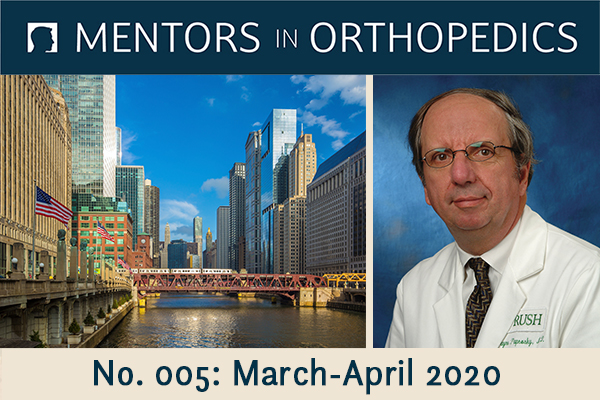
March-April 2020
Vol. 2 No. 005This month, we are honored to feature an interview with Wayne Paprosky, a leading authority in reconstructive hip surgery whose career traces an unconventional path from professional Canadian football to complex revision arthroplasty. Redirected from cardiology through clinical exposure to failed joint reconstruction, he developed the definitive acetabular classification system that continues to guide surgical decision-making globally. His current work examines the biomechanical relationship between the spine and pelvis, integrating digital planning to optimize outcomes in revision settings.
The clinical articles in this issue span knee reconstruction and surgical history. Topics include knee cartilage repair, acetabular reconstruction using a Kerboull-Tanaka reinforcement device, the indications for patellar resurfacing, and preoperative planning for fixed bearing lateral unicompartmental knee arthroplasty. A historical contribution examines Robert Merle d'Aubigné and the Judet brothers, contextualizing the foundational contributions that shaped modern orthopedic surgical practice.
-
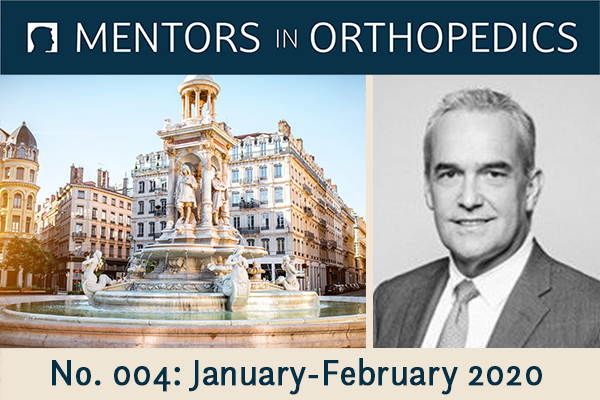
January-February 2020
Vol. 2 No. 004This month, we are honored to feature an interview with Dr. André Ferreira, orthopedic surgeon and successor to Gérard Gacon at the Clinique du Parc in Lyon. Trained within the Lyon school of arthroplasty, Dr. Ferreira has developed a career defined by consistent engagement with the technical evolution of hip and knee replacement. A proponent of double mobility and cementless fixation, he has extended his influence internationally through his role in organizing the Lyon Hip Arthroplasty congress, fostering public-private partnerships at a global level.
The scientific articles in this issue address several interconnected dimensions of hip surgery and implant technology. The mechanics and clinical implications of acetabular reaming are examined alongside radiological modes of fixation of a tapered, wedged proximally coated femoral stem, providing surgeons with both technical and evaluative perspectives on primary arthroplasty. Complementing these, a study on weight limits associated with commonly used femoral stems for total hip arthroplasty addresses critical patient safety considerations in implant selection. The integration of digital technology is explored through an analysis of robotic-assisted total hip arthroplasty: from planning to robotization, while contributions in shoulder surgery examine innovations in AC-joint reconstruction using low-profile implants.
-
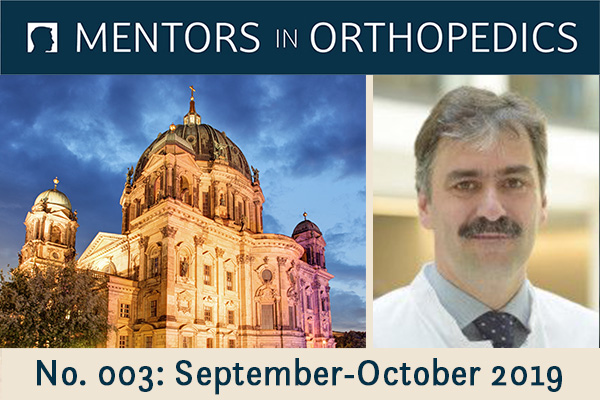
September-October 2019
Vol. 1 No. 003This month, we are honored to feature an interview with Professor Carsten Perka, Medical Director of the Charité in Berlin. His career, shaped in part by a personal experience with osteomyelitis, reflects a sustained commitment to clinical rigor and institutional leadership in German arthroplasty. Through his roles in the DKOU and the national registry, he has contributed to standardizing arthroplasty practice nationally, while his focus on translational medicine continues to bridge regenerative science and surgical decision-making.
The clinical articles address two major domains. In revision acetabular surgery, contributions examine cup-cage reconstruction for severe acetabular bone loss and pelvic discontinuity alongside patient-matched 3D-printed implants for Paprosky 3 acetabular defects guided by bone quality assessment. In primary knee arthroplasty, the issue explores an extension gap first technique applying adjusted mechanical alignment to minimize soft tissue releases, complemented by a systematic approach to total knee arthroplasty in posttraumatic osteoarthritis.
-
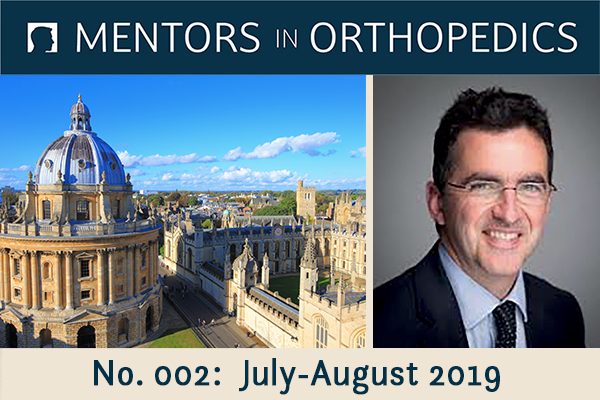
July-August 2019
Vol. 1 No. 002This month, we are honored to feature an interview with Professor Andrew Price, a senior academic surgeon at the Nuffield Orthopaedic Centre whose career exemplifies the integration of biomechanical research with evidence-based clinical practice. Shaped by the Oxford school of orthopaedic thought, Professor Price has dedicated his work to the refinement of unicompartmental knee arthroplasty, advancing from kinematic analysis to directing multicenter randomized trials. As President of the British Association for Surgery of the Knee, he currently leads efforts in robotic-assisted surgery and registry-based outcomes research.
The clinical articles in this issue address several domains of knee and hip surgery. Ligament reconstruction is represented by a practical guide on avoiding tunnel convergence during multiple-ligament knee surgery and a technical review of PCL reconstruction using the INLAY technique. Patellofemoral pathology is examined through technical advice for patellofemoral arthroplasty, while revision hip surgery is addressed through a discussion of the philosophy of total hip replacement revision at Mayo Clinic.
-
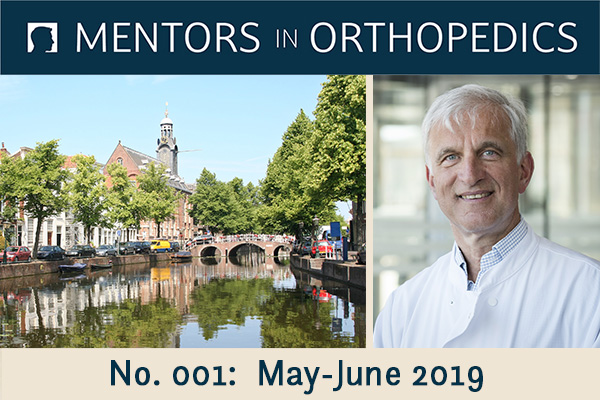
May-June 2019
Vol. 1 No. 001This month, we are honored to feature an interview with Professor Rob Nelissen, Chair of the Department of Orthopaedics at Leiden University Medical Center. Professor Nelissen's career spans foundational research in artificial cardiac devices to leading contributions in joint arthroplasty outcomes and implant surveillance. As a founding architect of the Dutch Arthroplasty Register, he has shaped European standards for surgical quality assessment. His current investigations into induction heating for periprosthetic infection exemplify his commitment to evidence-based, patient-centered innovation within an international collaborative framework.
The clinical articles address several converging domains. The evolving role of robotic-assisted knee surgery is examined alongside the contributions of national joint registries, including reflections on the NJR, and the implications of the EU Medical Device Regulation on research and patient care. Conservative hip surgery is revisited through an evaluation of femoral osteotomy, while antibacterial hydrogel implant coating presents a surgical technique with broad applications across orthopedics and trauma.